Curriculum guide for parents
What STEAM looks like in the American curriculum
STEAM in the American curriculum is built around one idea: children learn science, technology,
engineering, arts and mathematics by doing, not just by reading about them. Lessons start with a
question or a real problem, students investigate it with their hands, and the math and science
follow from what they observe. In a US-aligned school this is shaped by two national frameworks,
the California Common Core State Standards for English and Mathematics and the Next Generation
Science Standards (NGSS) for Science, which together push for inquiry, applied reasoning and
cross-subject thinking rather than memorizing facts for a single exam.
That approach feels different from the British and Indian systems many families in the UAE grew
up with. This guide compares all three across the things parents actually ask about: how STEAM is
taught, how it is assessed, how technology and coding fit in, how much subject choice a child
gets, and how each path leads to college and a career.
American, British and Indian STEAM at a glance
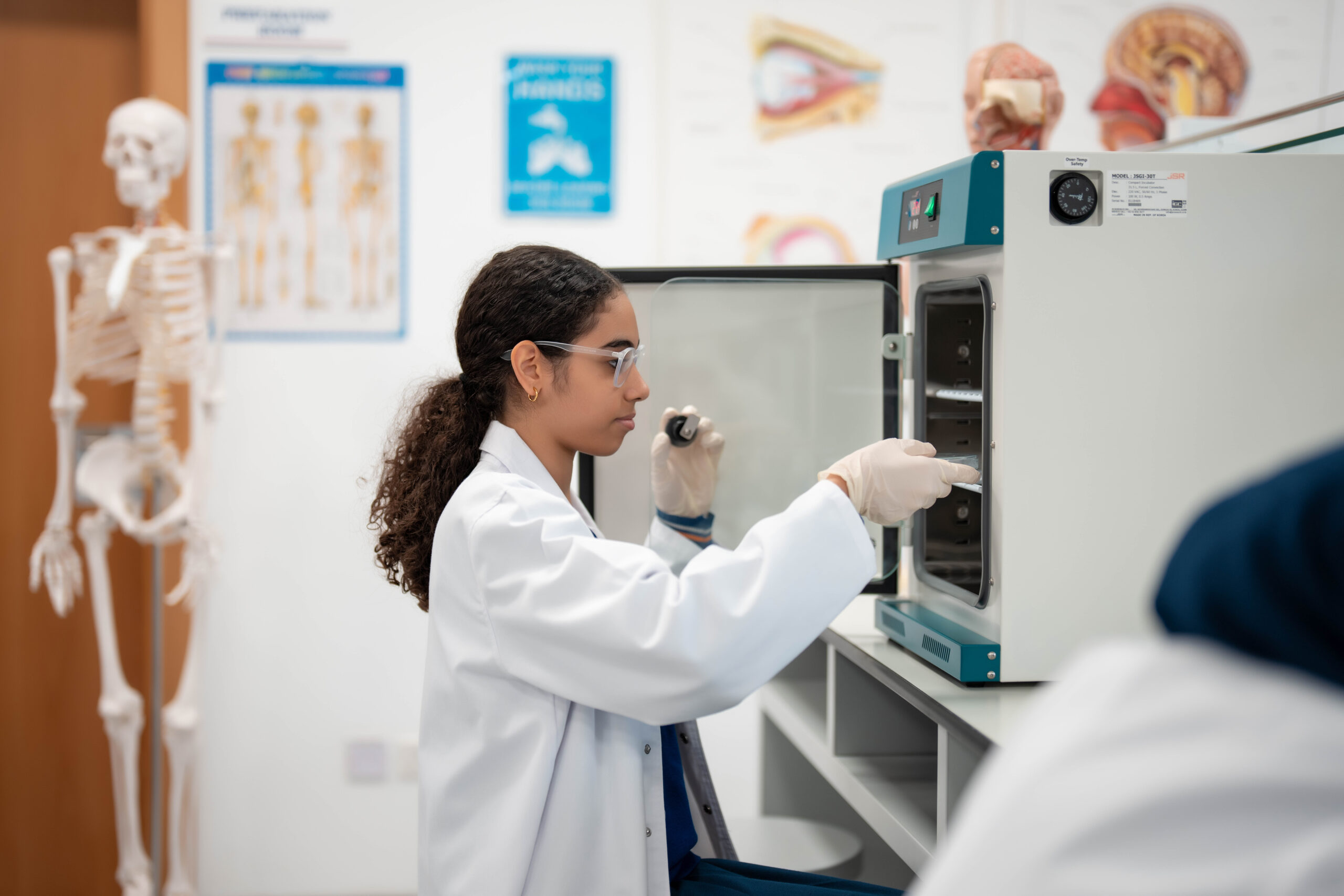
The three systems share the same goal, strong scientists, mathematicians and problem solvers, but
they get there in different ways. Use this table for a quick read, then the sections below explain
each row in plain language.
| What to compare | American curriculum | British curriculum | Indian curriculum |
|---|---|---|---|
| Core standards | Common Core (English & Math) and NGSS for Science | National Curriculum of England, Cambridge IGCSE and A-Level | CBSE or ICSE under the National Curriculum Framework |
| Teaching approach | Inquiry-led, hands-on, subjects connected together | Structured and specification-driven, topic by topic | Content-rich, strong theory with deep practice |
| Assessment | Continuous: coursework, projects, GPA, plus MAP and AP | Mainly terminal exams at GCSE/IGCSE and A-Level | Board exams in Class 10 and 12, heavily exam-weighted |
| Coding & robotics | Embedded across science and design, project-based | Computing taught as a defined standalone subject | Computer science as a subject, growing maker labs |
| Subject flexibility | Broad, many electives, students specialize later | Narrows early to three or four A-Level subjects | Stream-based (Science, Commerce, Arts) after Class 10 |
| University pathway | US diploma and AP, flexible routes worldwide | A-Levels, the established route into UK universities | Boards plus entrance exams such as JEE and NEET |
How each system teaches STEAM
American: learn by investigating
A typical NGSS science lesson opens with a phenomenon to explain. Children predict, build, test
and revise, and the teacher draws out the science from what the class discovered. Math is
applied to real situations, and subjects are deliberately linked, so a single project can touch
engineering, data and writing at once.
British: structured and sequential
The British classroom works through a clear specification, building knowledge topic by topic
toward GCSE and A-Level. Practical work matters, but it sits inside a well-defined syllabus, and
children know early what each exam will cover. The result is depth in chosen subjects and a
steady, predictable progression.
Indian: depth and rigor
CBSE and ICSE are known for academic rigor, especially in math and science. Indian students
often meet topics in algebra, calculus foundations and chemistry a year or two earlier than
their American peers, which builds a strong quantitative base. The classroom leans on thorough
theory backed by regular practice.
Assessment
How the exam pressure compares
For many parents this is the real difference. The American system spreads assessment across the
year, so a child is judged on projects, class work and several checkpoints rather than one
high-stakes paper. British and Indian systems place far more weight on terminal board exams.
- American: continuous grades feed a GPA, with MAP growth checks through the year and Advanced Placement (AP) exams for college-level work in the final years.
- British: the grade rests mainly on external GCSE, IGCSE and A-Level examinations taken at the end of a course.
- Indian: Class 10 and Class 12 board results carry significant weight, and competitive entrance tests often decide university places.
Neither model is better in the abstract. Continuous assessment rewards steady effort and
curiosity; exam-led models reward mastery under pressure. What matters is the fit with your
child.
Technology, coding and robotics
Where the hands-on part really shows
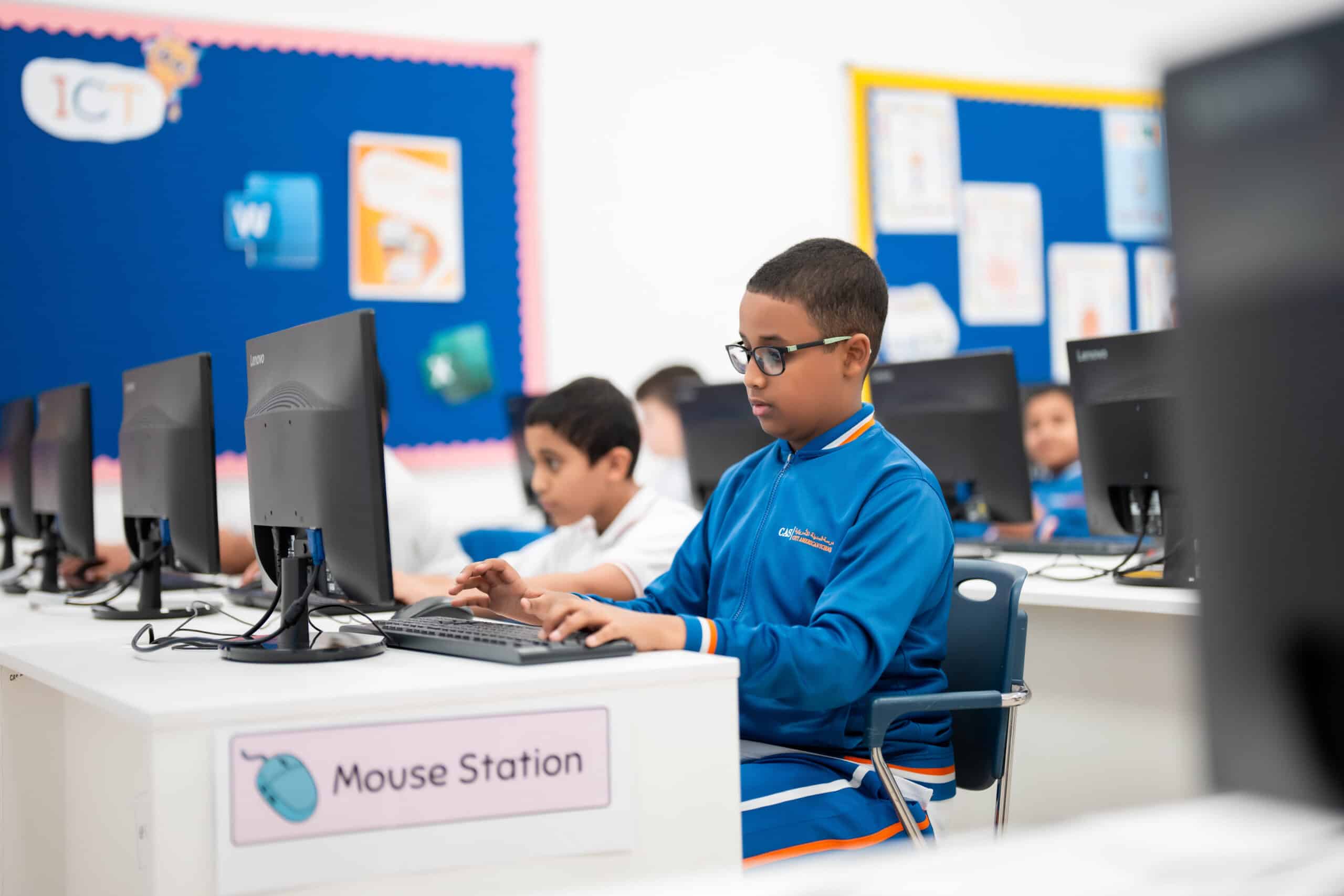
Because NGSS treats engineering design as part of science, American-curriculum classrooms tend to
fold coding, robotics and prototyping straight into ordinary lessons rather than parking them in a
separate slot. A unit on energy might end with students programming a small robot or building a
testable model. Specialist science and computer labs make this possible, and at City American
School families can see the range of
specialist science and computer labs
that support this kind of work.
- Project-based tasks that end in something built, coded or tested
- Coding and robotics woven through science and design
- Real-world challenges aligned to NGSS engineering practices
Choice and the road ahead
Subject flexibility and getting to college
Flexibility is one of the clearest dividing lines. American students keep a broad mix of subjects
for longer and specialize gradually, choosing electives and AP courses as their interests sharpen.
British students narrow early to three or four A-Level subjects, and Indian students pick a stream
such as Science or Commerce after Class 10. Each approach is a trade-off between breadth and early
depth.
The path to higher education follows from that. The American high school diploma combined with AP
scores is recognized by universities in the US, UK, Canada, Europe and across the Gulf, which
suits families who are not yet certain where their child will study. Children build toward it
steadily, starting with applied
STEAM projects in middle school
and moving into the more demanding
American high school program with AP pathways
and college counseling in the senior years.
A-Levels remain the gold standard for direct UK entry, while Indian boards paired with entrance
exams open the strong engineering and medical routes that India is known for. The right choice
depends on where you expect your child to apply, not on which system is universally best.
Which curriculum suits your child?
The curious, hands-on learner
A child who likes asking why, building things and connecting ideas across subjects usually
thrives in the American model, where inquiry and projects are the daily method and a broad
subject mix keeps options open.
The focused specialist
A learner who already knows their strengths and prefers a clear, structured route toward a few
subjects often does well in the British system, especially if a UK university is the goal.
The deep quantitative mind
A student who enjoys rigorous math and science and rises to exam challenges can flourish under
CBSE or ICSE, which build serious quantitative depth early.
Common misconceptions, cleared up
- “American STEAM is less rigorous.” Rigor shows up differently. NGSS three-dimensional learning and AP courses are demanding; the depth lives in applying knowledge to real problems rather than in the sheer volume of exam papers.
- “Hands-on means less content.” The standards still set out exactly what must be covered. Inquiry is the method for getting there, and understanding built through investigation tends to stick.
- “Switching curricula will set my child back.” Most transitions are manageable with support, particularly at natural break points, and children often adapt faster than parents expect.
STEAM at City American School
A hands-on, future-focused American curriculum in Ajman
City American School delivers a full US curriculum from Kindergarten to Grade 12 under one roof,
aligned to California Common Core and NGSS, so the inquiry-led, project-based STEAM described above
is how lessons actually run. Progress is tracked with MAP growth assessments and International
Benchmark Tests, the school is Cognia (AdvancED) accredited and an AP / College Board approved
center, and a dedicated Inclusion Department supports gifted learners and children of
determination so every child can take part in hands-on STEAM.
Alongside the American program, Arabic, Islamic Education and Social Studies are taught to UAE
Ministry of Education requirements, and beyond the classroom there are academic clubs and
robotics and STEAM activities
that let students keep building, coding and experimenting.

Frequently asked questions
What does STEAM in the American curriculum actually mean?
It means science, technology, engineering, arts and math are taught through inquiry and hands-on projects rather than rote learning. Lessons are guided by the Common Core standards for English and Math and the Next Generation Science Standards for Science, which emphasize investigation, real-world application and connections across subjects.
How is STEAM taught differently in American, British and Indian schools?
The American approach is inquiry-led and interdisciplinary, with continuous assessment. The British approach is structured and specification-driven, building toward terminal GCSE and A-Level exams. The Indian approach is content-rich and rigorous, especially in math and science, with heavy weight on Class 10 and 12 board exams.
Is American-curriculum STEAM less rigorous than CBSE or A-Levels?
No, it is rigorous in a different way. Instead of front-loading exam volume, it asks students to apply knowledge to real problems and offers Advanced Placement courses for college-level study. CBSE and A-Levels tend to introduce certain quantitative topics earlier, while the American model builds applied depth over time.
Does the American curriculum include coding and robotics?
Yes. Because engineering design is built into NGSS, coding, robotics and prototyping are usually woven through science and design lessons and reinforced in clubs and activities, rather than taught only as a separate computing subject.
How is STEAM assessed in the American curriculum?
Through continuous assessment. Coursework, projects and class participation feed into a GPA, growth is checked with MAP assessments through the year, and AP exams in the senior years allow students to earn college-level recognition.
Which curriculum is best for a child who loves science and math?
All three can serve a science-minded child well. A learner who enjoys investigation and a broad subject mix tends to suit the American curriculum; one who wants early, exam-driven depth may prefer CBSE, ICSE or A-Levels. The better question is which teaching style and university pathway fit your child.
Will American-curriculum STEAM prepare my child for college and a career?
Yes. The American high school diploma with AP scores is recognized by universities in the US, UK, Canada, Europe and the Gulf, and the inquiry and problem-solving skills it builds map directly onto modern engineering, computing, medical and research careers.
Does City American School follow the American STEAM standards?
Yes. City American School in Ajman teaches a full US curriculum from Kindergarten to Grade 12 aligned to California Common Core and NGSS, supported by specialist science and computer labs, MAP progress tracking, Cognia accreditation and AP / College Board approval.
Comparing pathways for your child?
If you are weighing options in the UAE, it also helps to see
how the American curriculum compares with the UAE Ministry of Education system,
so you can match the right pathway to your family’s plans.